Overview
If you have outgrown basic email tools and want marketing that more or less runs itself in the background, ActiveCampaign often shows up near the top of the shortlist. It is an all‑in‑one email marketing, automation, and light CRM platform designed for businesses that care about intelligent customer journeys rather than just blasting newsletters.
In this review, you will get a human, no‑nonsense look at what ActiveCampaign does well, where it can be frustrating, how the pricing really works, and who it is best suited for. Think of it as the opinion you would get from a friend who has actually used automation tools, not a glossy brochure.
What ActiveCampaign Actually Is
At its core, ActiveCampaign is a marketing automation platform that combines:
- Email marketing and campaigns
- A visual automation builder
- Built‑in CRM and sales pipelines
- Customer experience tools like site tracking, forms, and messaging
Instead of stitching together separate tools for email, tagging, and sales follow‑up, ActiveCampaign lets you manage everything in one place and trigger actions based on what people actually do—open, click, visit pages, buy, or ignore you. It aims to be the brain of your marketing system, quietly watching behavior and firing off the right follow‑ups at the right time.
A simple way to picture it: imagine a very organized assistant who never sleeps, checks every contact’s activity, and decides who should get which email, tag, or sales task next. That is essentially how ActiveCampaign behaves behind the scenes.
Key Features (Beyond Just Sending Emails)
Visual Automation Builder
The star of ActiveCampaign is the automation builder—a drag‑and‑drop canvas where you design workflows using triggers, conditions, and actions. You can start from over 800–900 pre‑built automation recipes covering welcome series, abandoned carts, re‑engagement campaigns, lead nurturing, and more.
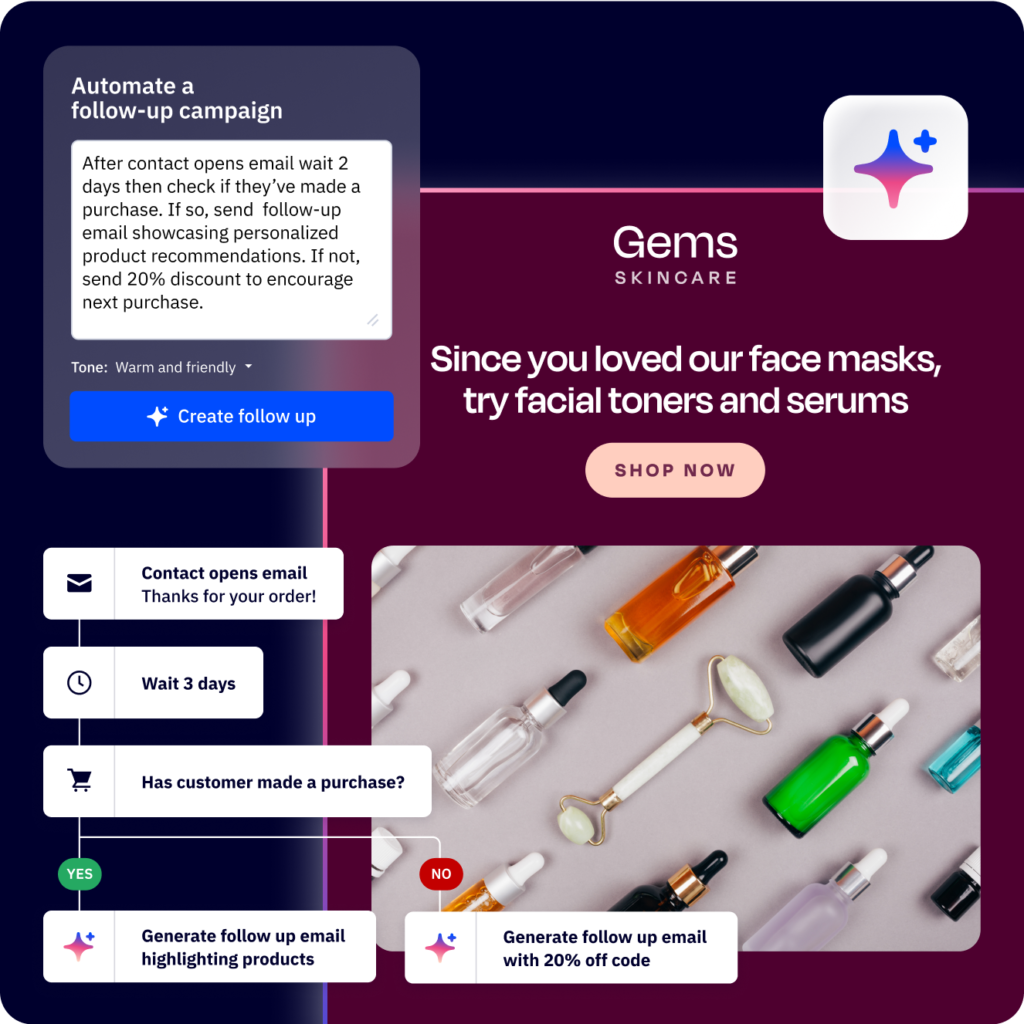
For example, you could create a journey like this:
- When someone downloads your lead magnet, they get a short email sequence.
- If they click on a “pricing” link, they are tagged as high intent and moved to a sales‑focused flow.
- If they book a call, the system automatically creates a deal in the CRM and assigns it to a salesperson.
All of that can run without you touching anything once it is set up. It is powerful, but the flip side is that complex workflows can feel heavy and take a bit of practice to manage cleanly.
Email Campaigns and Templates
ActiveCampaign started life as an email marketing tool, and it still shows. The email editor is drag‑and‑drop, with more than 200–250 templates you can adapt to your brand without wrestling with HTML.
You get the usual essentials—scheduled campaigns, RSS campaigns, one‑off blasts, and A/B testing for subject lines and content. There are also deliverability‑focused features like spam testing and good inbox placement, which multiple independent reviews note as a real strength.
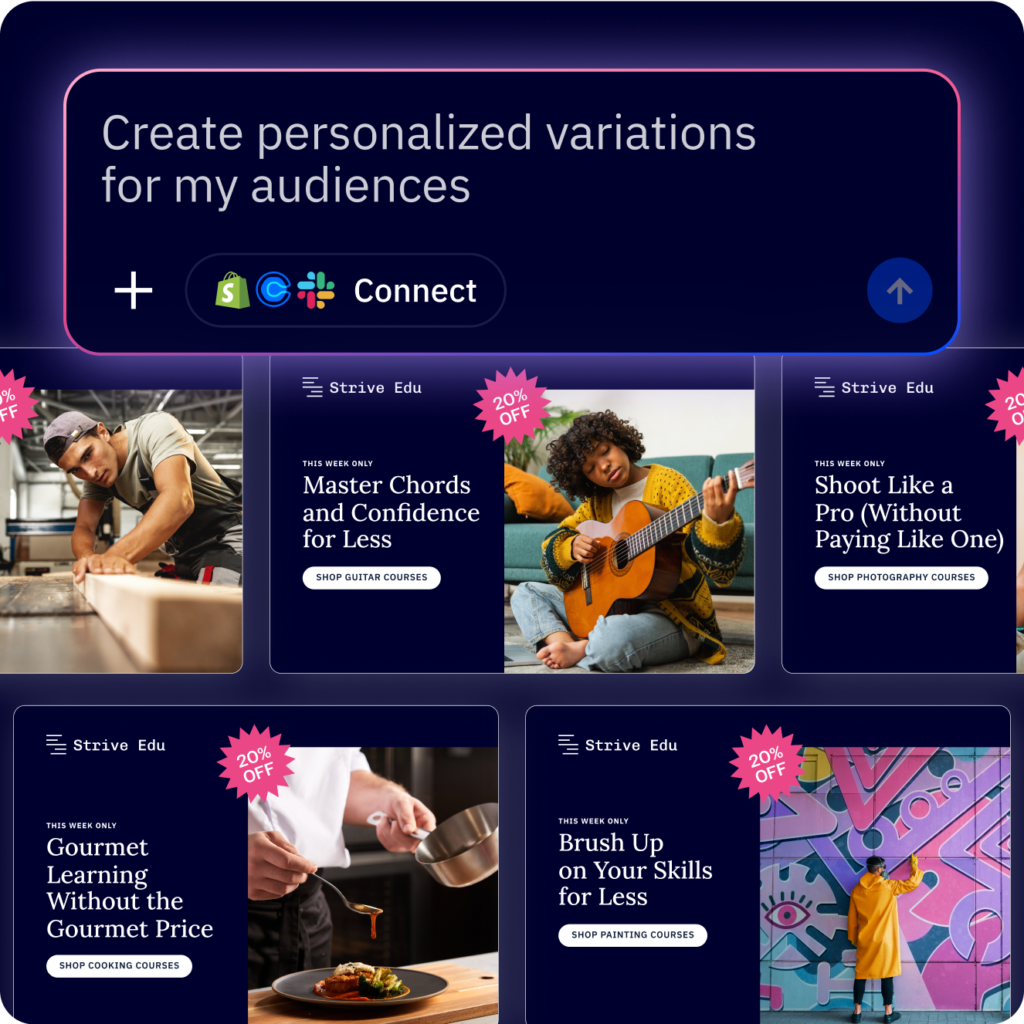
Is the editor perfect? Not really. Some users report occasional glitches and slightly clunky formatting when building more complex layouts, especially for mobile views. It is more than good enough for most teams, but if you are extremely picky about pixel‑perfect design, you may notice the rough edges.
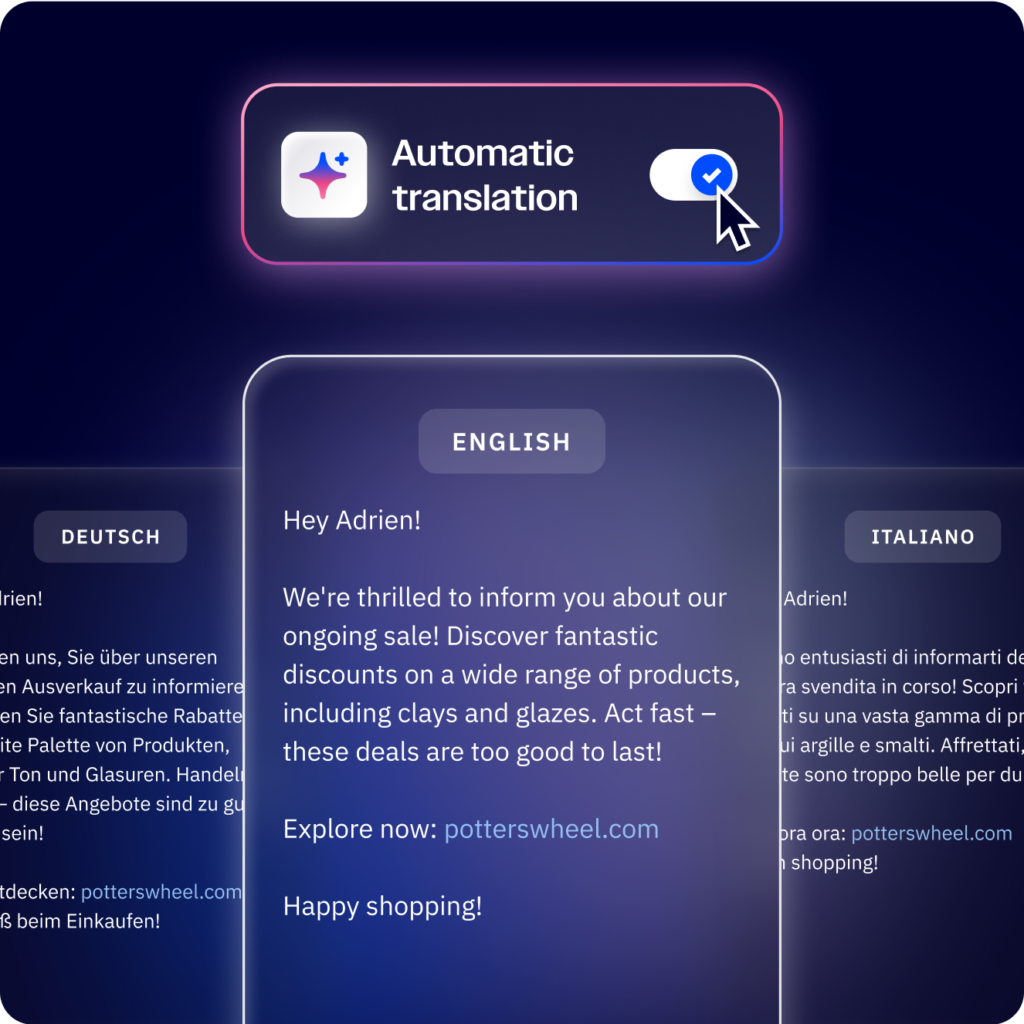
Advanced Automation and AI Help
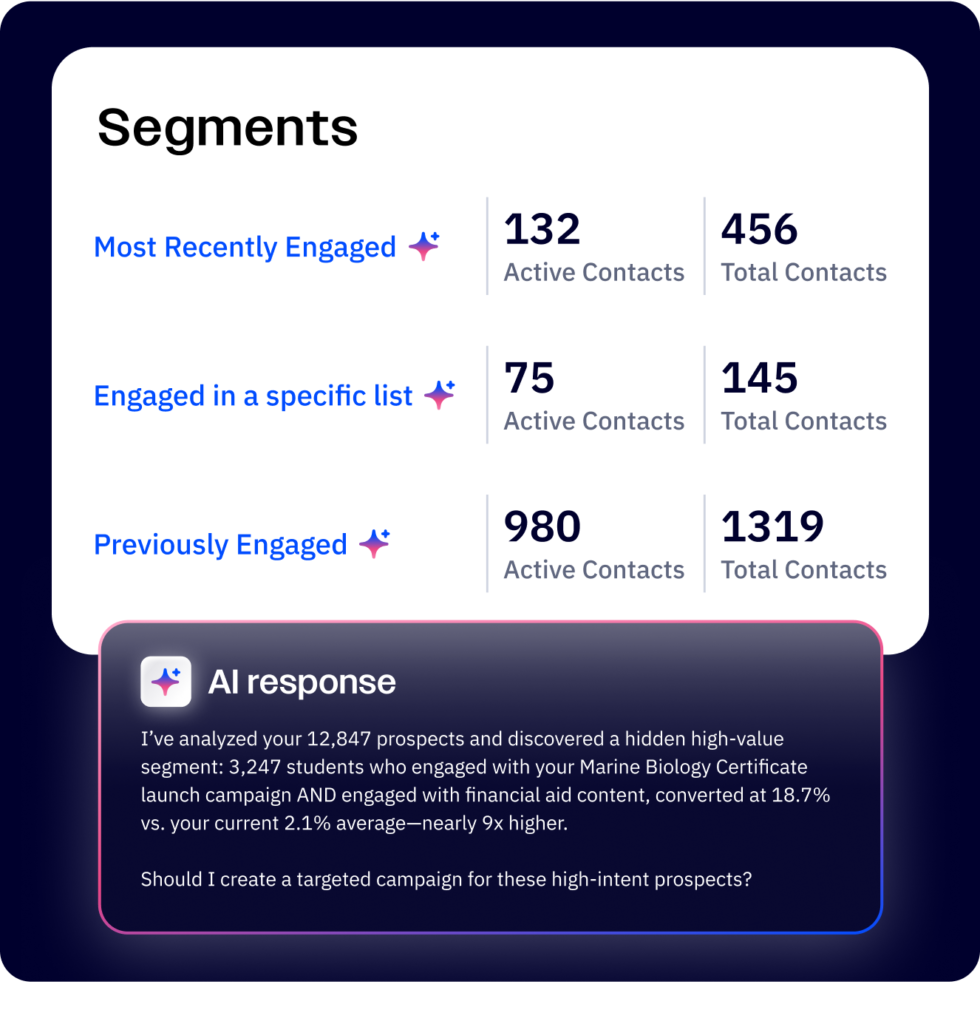
In recent versions, ActiveCampaign has layered in more AI‑driven helpers and advanced logic on top of its traditional workflows. You will see features like:
- Predictive sending, which tries to deliver emails when each contact is most likely to open them
- Predictive content, where you write multiple variations and the system learns which version to send to whom
- AI‑assisted automation building, which can suggest or generate steps based on a goal you describe
Actually, this is where ActiveCampaign feels closer to a strategist than a simple tool—it is trying to optimize timing and content, not just execute your static rules. For teams willing to experiment, that extra layer can translate into small but meaningful gains in engagement and revenue over time.
CRM and Sales Pipelines
Unlike many email tools that bolt on a basic contact list, ActiveCampaign includes a built‑in CRM that ties directly into your automations. You can create pipelines, deals, stages, and tasks, then automatically move deals based on what leads do.
Picture this: when a lead reaches a certain engagement score—after opening key emails, visiting your pricing page, and maybe attending a webinar—the system can create a deal, assign it to a rep, and send an internal notification without anyone exporting a spreadsheet. That tight connection between marketing and sales activities is a big reason small and mid‑sized teams choose ActiveCampaign over using a separate CRM plus a disconnected email tool.
There are also separate CRM flavors optimized for B2B and B2C use cases, which makes it easier to tailor pipelines to your business model.
Integrations and Channels
Out of the box, ActiveCampaign integrates with popular ecommerce platforms like Shopify and WooCommerce, major CRMs, forms tools, and hundreds of other apps through native integrations and Zapier‑style connectors.
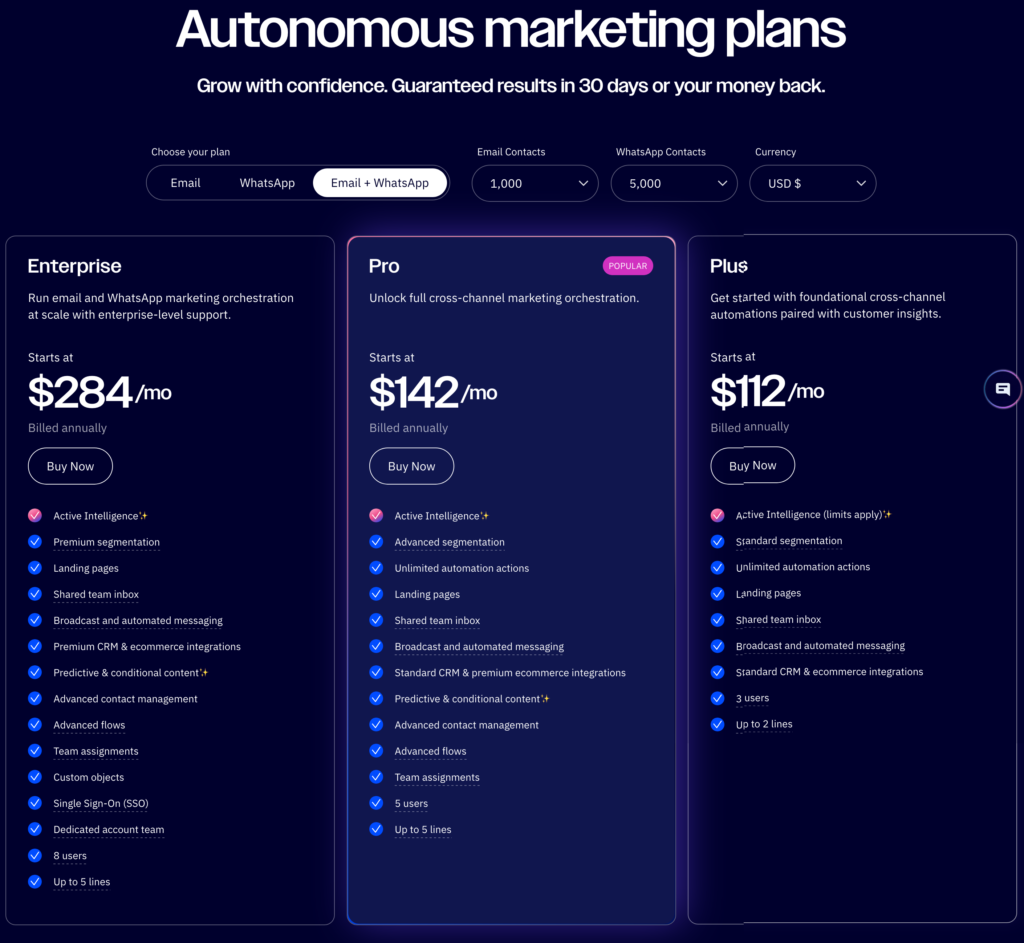
On the messaging side, it goes beyond email with options like site messages, SMS, and WhatsApp as part of newer cross‑channel bundles. For example, you can send an email, then follow up with a WhatsApp nudge if someone still has not completed their purchase.
This multi‑channel approach is useful if you are tired of emailing people to death and want a more balanced mix of touchpoints.
Pricing: What You Actually Pay
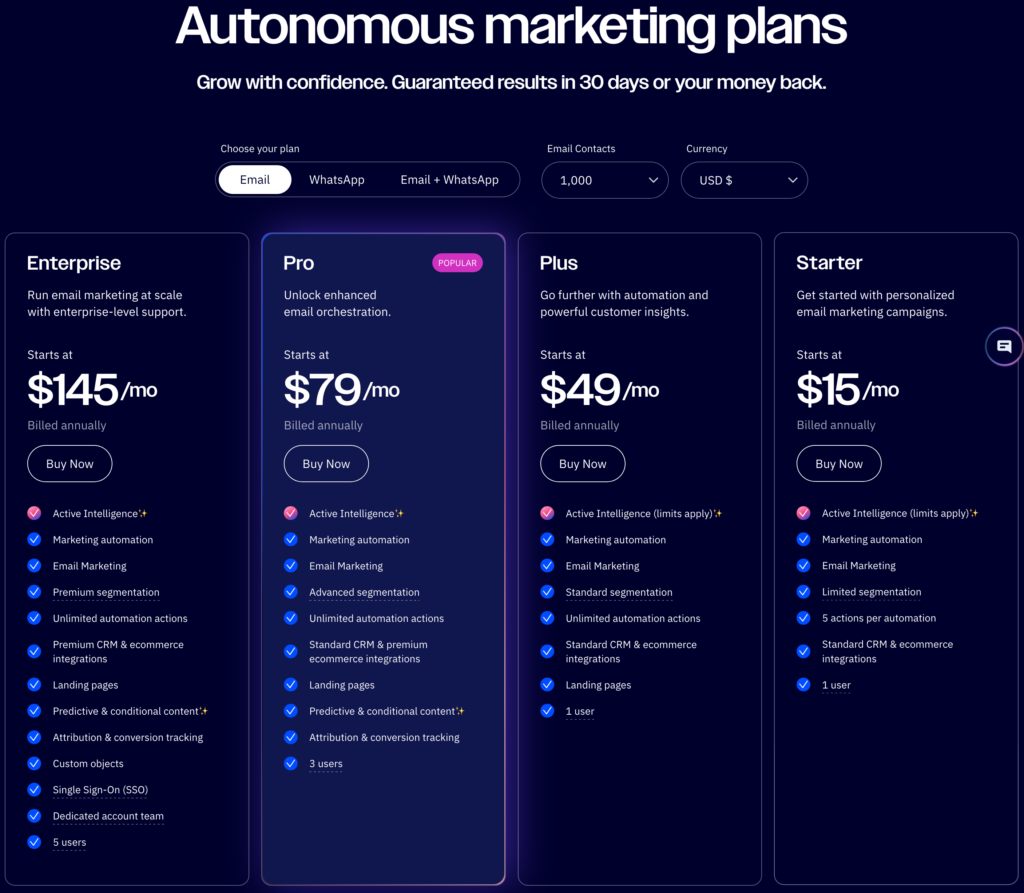
Well, this is where things get interesting. ActiveCampaign uses contact‑based pricing with several plan tiers—commonly Starter, Plus, Pro, and Enterprise—with the monthly cost rising as both your feature needs and contact list grow.
For email marketing alone, pricing in 2026 for around 1,000 contacts starts roughly in the mid‑teens per month on the Starter plan if billed annually, with Plus and Pro jumping to higher monthly figures as you unlock advanced automation, CRM, and reporting. Independent pricing breakdowns show that as you climb from a few thousand contacts up to 10,000 or even 50,000, your bill can move from double‑digits to several hundred dollars per month or more, especially on Pro and Enterprise tiers.
There are also cross‑channel and WhatsApp‑focused product bundles where baseline pricing is higher but includes multiple channels in one plan. In other words, the headline “from” price looks affordable, but you do need to think a few steps ahead about where your list size will land in a year or two.
To make this more concrete, imagine a growing online store:
- At 1,000 contacts on a Starter‑level plan, the spend feels very manageable.
- At 5,000–10,000 contacts with advanced automation and CRM enabled, the monthly cost might rival what you pay for other major SaaS tools in your stack.
- Beyond 20,000 contacts, you are squarely in “serious investment” territory and should be using most of the platform’s capabilities to justify it.
There is no permanent free plan, which is an important difference from more beginner‑friendly tools. Trials and discounts exist, but over the long term this is paid software meant for businesses that value automation enough to budget for it.
Real‑World Use Cases
To see whether ActiveCampaign fits, it helps to look at some realistic scenarios.
Scenario 1: Content‑Driven Coaching Business
A solo coach offers a free email course, weekly newsletter, and paid group program. With ActiveCampaign, they can:
- Deliver the email course automatically over a few weeks.
- Tag subscribers who click on specific topics to understand interests.
- Trigger an invite sequence when someone hits a “warm lead” score.
- Push hot leads straight into a simple CRM pipeline for personal outreach.
Here, the main win is time—no more manually tracking who is ready for a call versus who is just browsing.
Scenario 2: Ecommerce Brand with Repeat Buyers
An online store wants to increase repeat orders. Using ActiveCampaign, they can:
- Connect their store so purchases and order values sync automatically.
- Send tailored post‑purchase sequences based on what someone bought.
- Trigger win‑back flows for customers who have not ordered in 60–90 days.
- Use predictive sending to hit inboxes when each customer is most likely to see the message.
Over time, this type of behavior‑based automation can quietly lift lifetime value without needing constant campaign planning.
Scenario 3: Small Sales Team with Long Deals
A B2B team sells software with a multi‑step sales cycle. They use ActiveCampaign to:
- Score leads based on engagement with webinars, pricing pages, and emails.
- Automatically move deals to new pipeline stages when key actions occur.
- Trigger follow‑up tasks and reminders for reps when prospects go quiet.
- Sync data to and from other tools via integrations.
In this setup, ActiveCampaign is less of a “newsletter tool” and more like the connective tissue between marketing and sales.
Pros of ActiveCampaign
From a practical point of view, several strengths come up again and again in independent reviews and user feedback.
- Exceptionally strong automation builder, with deep conditional logic and hundreds of templates to shortcut setup.
- Advanced segmentation and tagging, making it easy to send very specific messages to the right people.
- Built‑in CRM so marketing and sales data live in the same ecosystem and can trigger each other.
- Solid deliverability and spam‑testing tools that help keep campaigns out of the junk folder.
- Rich integration ecosystem across ecommerce, forms, CRMs, and other SaaS tools.
For teams willing to invest time upfront, all of this combines into a system that can feel almost like an extra team member quietly running campaigns in the background.
Cons and Trade‑Offs
Of course, ActiveCampaign is not the perfect fit for everyone. Common friction points include:
- The learning curve can be steep, especially for people who are new to automation or have only used basic newsletter tools before.
- Pricing climbs quickly as your contact list grows, particularly on higher‑tier plans, which can surprise smaller businesses that scale faster than expected.
- The email editor and reporting, while capable, are occasionally described as clunky or less polished than specialized competitors.
- There is no permanent free plan, so true beginners or hobby projects may find it overkill both in complexity and cost.
In other words, you get serious power, but you pay for it in both money and the effort needed to set things up thoughtfully.
Who ActiveCampaign Is Best For
Putting all of this together, ActiveCampaign tends to be a strong fit for:
- Small to mid‑sized businesses that are ready to move beyond “newsletter only” thinking and build proper customer journeys.
- Ecommerce brands that want to connect purchases, behavior, and messaging without buying a heavyweight enterprise suite.
- B2B teams that value marketing and sales alignment and like the idea of a CRM tightly woven into automation.
It is usually not ideal for:
- Casual bloggers or solo creators who just want to send the occasional broadcast.
- Very price‑sensitive projects that need to keep software spend to an absolute minimum.
- Teams that have no bandwidth or interest in learning automation logic—they will likely underuse what they pay for.
If you are somewhere in the middle—already earning revenue, already sending campaigns, and now feeling constrained by your current tool—then trying ActiveCampaign for a serious, structured test is usually worth it.
Final Verdict
So, is ActiveCampaign “worth it”? The honest answer is: it depends on whether you will genuinely use what it is built for.
For businesses that want more than basic email—who care about behavior‑based automation, nuanced segmentation, and tight links between marketing and sales—ActiveCampaign offers a mature, battle‑tested platform that can scale with you for years.
However, if you mainly send simple campaigns, hate tinkering with workflows, or are extremely cost‑sensitive, you may find the learning curve and pricing structure heavier than you need right now. In that case, a simpler, cheaper tool could be a better first step, with the option to move up to ActiveCampaign later when your marketing becomes more sophisticated.
Think of ActiveCampaign less as a “newsletter app” and more as the central nervous system of your customer communication. For the right kind of business, that shift in mindset makes the price and effort feel far more like an investment than an expense.
Read Our another Review: Streak – CRM for Gmail Review (2026): Pricing, Pros & Cons