If you’ve spent any amount of time around digital marketing, eCommerce, lead generation, or social media automation, you’ve probably heard someone mention Manychat like it’s some kind of secret weapon. And, honestly, in the right hands, it kind of is.
But let’s slow down for a second.
A tool can be popular and still not be right for everyone. That’s where a real review matters. Not the polished sales-page version. Not the breathless “this changed my business overnight” pitch. A proper, grounded look at what Manychat actually does, where it shines, where it stumbles, how much it costs, and who will genuinely get value from it.
Because here’s the truth: automation sounds magical until you’re the one setting it up.
Some platforms promise simplicity and then greet you with a dashboard that feels like an airplane cockpit. Others are so stripped down they become frustrating the moment your business grows. Manychat sits somewhere in the middle. It tries to be approachable for beginners while still offering enough sophistication for marketers who want to build smart, revenue-generating automations.
And that balancing act is exactly why it has become such a well-known name in chat marketing.
In this review, we’re going to unpack Manychat in plain English. We’ll look at its core features, pricing structure, strengths, drawbacks, and the kind of business that can benefit from it most. No fluff. No robotic filler. Just a practical breakdown written for people who want to know whether this thing is actually useful.
What Is Manychat, Really?
At its core, Manychat is a chat automation platform. It helps businesses automate conversations across messaging channels like Instagram, Facebook Messenger, WhatsApp, Telegram, SMS, and email. In simpler terms, it lets you build automated message flows so you don’t have to manually respond to every inquiry, lead, or customer interaction.
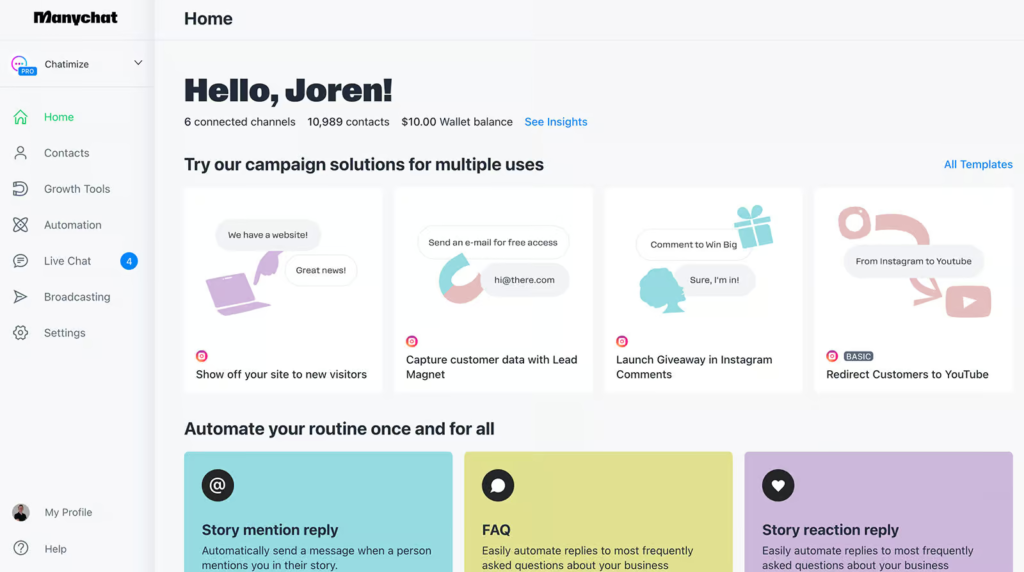
Think of it like hiring a very organized digital assistant who never sleeps, never forgets to follow up, and can handle hundreds of conversations at once. Of course, unlike a human assistant, it only does what you tell it to do. So if the setup is sloppy, the results will be sloppy too.
That’s an important point. Manychat is not magic dust. It’s an engine. A capable one, yes, but still an engine. You need a direction, a funnel, a goal.
For example, imagine you run an online skincare brand. Someone comments “info” under your Instagram reel about acne treatment. Instead of manually replying to every comment and then continuing the conversation in DMs, Manychat can automatically send that person a direct message, ask a qualifying question, deliver a product guide, collect their email, and even route them toward a purchase page. All of that can happen while you’re sleeping, eating dinner, or pretending to “take a quick break” that somehow turns into 47 minutes on TikTok.
That’s where the platform becomes attractive. It saves time, standardizes communication, and turns scattered social interactions into something more deliberate.
Why So Many Marketers Use Manychat
Well, the big reason is simple: messaging converts.
People ignore emails. They skim websites. They bounce off landing pages. But direct messages? Those feel personal. Immediate. Familiar. When someone receives a message on Instagram or WhatsApp, it lands in a place they already use every day. That changes the psychology of the interaction.
Manychat capitalizes on that behavior. Instead of forcing users into a stiff, formal funnel, it brings the funnel into a conversational environment. And that often leads to better engagement.
A coach might use Manychat to deliver a free guide after someone comments on a post. A real estate agent might use it to qualify buyer interest and schedule appointments. A local restaurant could automate replies for reservations, location info, or catering inquiries. An eCommerce store might recover leads, answer common pre-sale questions, and push limited-time offers through automated sequences.

That flexibility is one of its strongest selling points. Manychat isn’t locked into just one use case. It can be used for customer support, lead generation, sales conversations, appointment booking, community growth, and follow-up campaigns.
In other words, it’s not just a chatbot builder. It’s more like a conversation workflow tool for businesses that want less manual back-and-forth and more scalable communication.
The Main Features of Manychat
Let’s get into the part most people care about: what you can actually do with it.
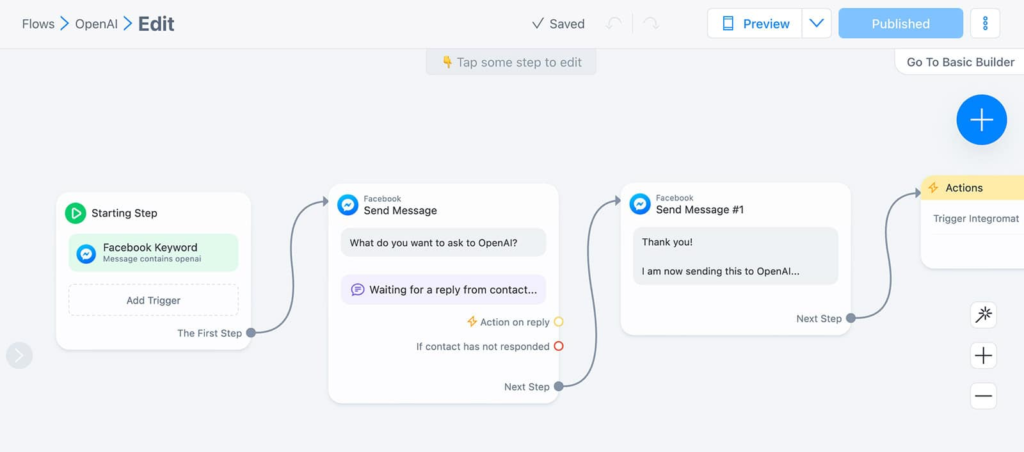
One of the most talked-about parts of Manychat is its visual flow builder. This is where you create automations by linking steps together in a drag-and-drop style interface. Instead of writing code, you build logic visually. A person sends a message, clicks a button, comments on a post, or replies with a keyword, and then the system reacts according to the path you designed.
That matters more than it sounds.
A good flow builder can make automation feel intuitive. A bad one turns every small change into a headache. Manychat generally does a good job here, especially for users who don’t come from a technical background. You can map out customer journeys in a way that feels tangible, almost like drawing a route on a whiteboard.
The platform also supports keyword triggers. So if someone types “price,” “details,” “book,” or any word you define, Manychat can respond automatically. This is useful for repetitive questions that would otherwise eat up your day.
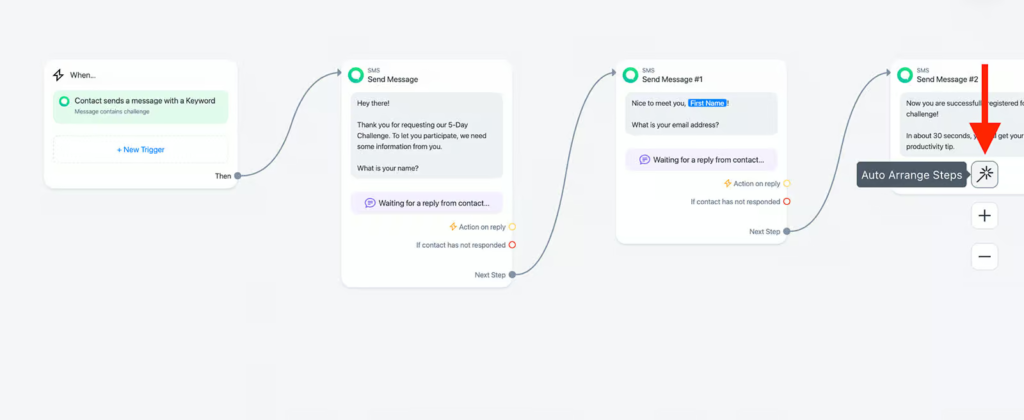
Then there are comment automation tools, which have become especially popular for Instagram marketing. Let’s say you post a reel and ask viewers to comment “guide” if they want your checklist. Manychat can detect that comment and instantly send the user a DM. That one feature alone is a huge reason why creators and social media marketers love it. It bridges public engagement and private conversion.
Another strong feature is segmentation. You can tag contacts based on behavior, interests, actions, or responses. Maybe someone clicked a link about pricing but ignored your webinar invite. Maybe they identified themselves as a beginner instead of an advanced user. Manychat can store that information and use it later to personalize future messages.
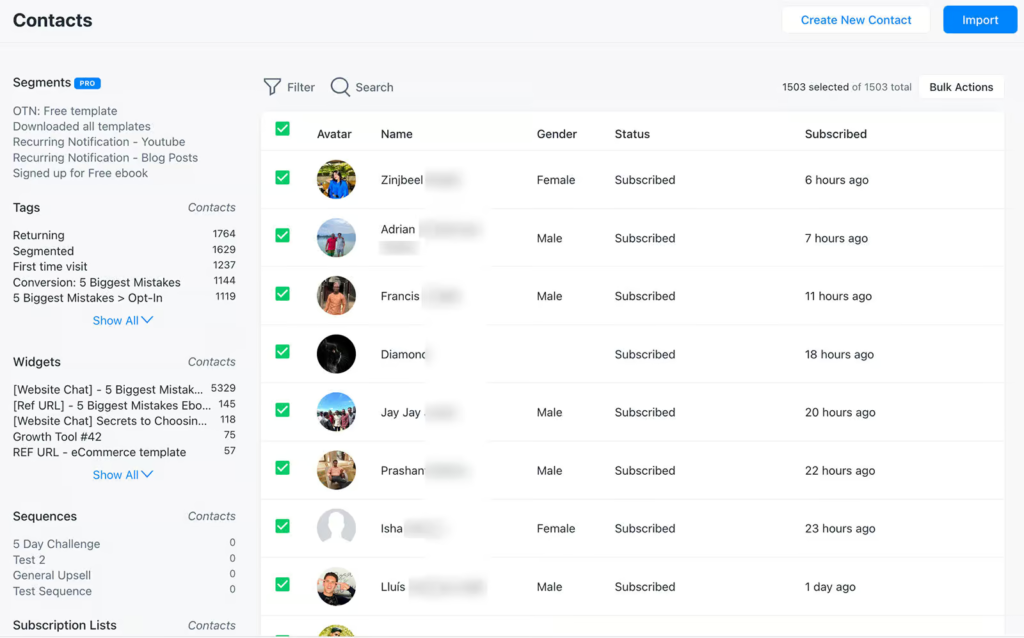
That’s when automation stops feeling generic and starts feeling smart.
There are also broadcast and sequence tools. Broadcasts let you send a message to a wider audience segment, while sequences allow you to drip messages over time. If email marketing is like sending a newsletter, Manychat sequences are like sending a controlled stream of follow-ups inside the messaging channels people already check all day.
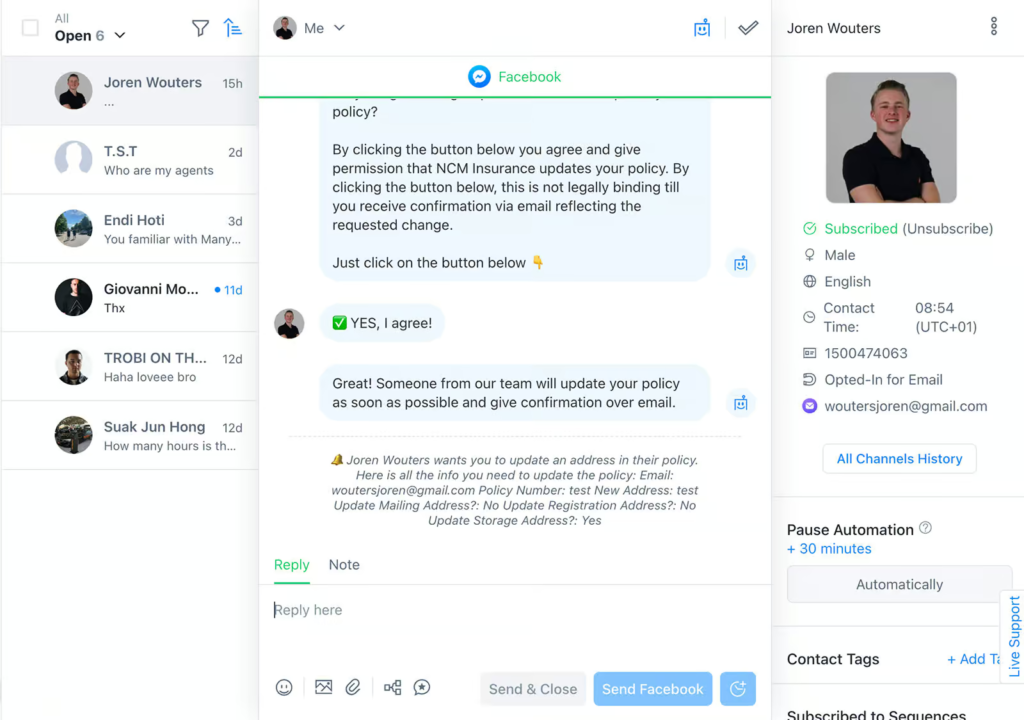
Live chat is another practical feature. Automation is helpful, but sometimes a real human needs to step in. Manychat allows that handoff, which is important. Nobody wants to trap a customer in bot purgatory.
More recently, AI-related tools have become part of the platform as well. These features aim to make automations more adaptive and reduce the need to rely only on rigid keyword matching. Depending on your use case, that can be useful. That said, AI doesn’t automatically mean “better.” Sometimes it means “less predictable.” So it’s a feature worth testing carefully, not blindly trusting.
What Using Manychat Feels Like
Actually, this is where a lot of reviews get lazy. They list features but never talk about what the day-to-day experience is like.
Using Manychat is generally smoother than using many enterprise-heavy automation platforms. The interface is built for marketers, creators, and business owners, not just developers. That lowers the intimidation factor.
If you’re brand new to automation, you’ll probably still need a short adjustment period. That’s normal. There’s always a learning curve when you’re dealing with triggers, conditions, tags, paths, and user journeys. But compared with building a custom chatbot from scratch, Manychat feels far more manageable.
It’s a bit like using a website builder instead of coding a website by hand. You still need taste, logic, and planning, but the scaffolding is already there.
For smaller businesses, that’s a major win. You don’t need a developer sitting beside you every time you want to tweak a welcome message or add a follow-up. You can usually do it yourself.
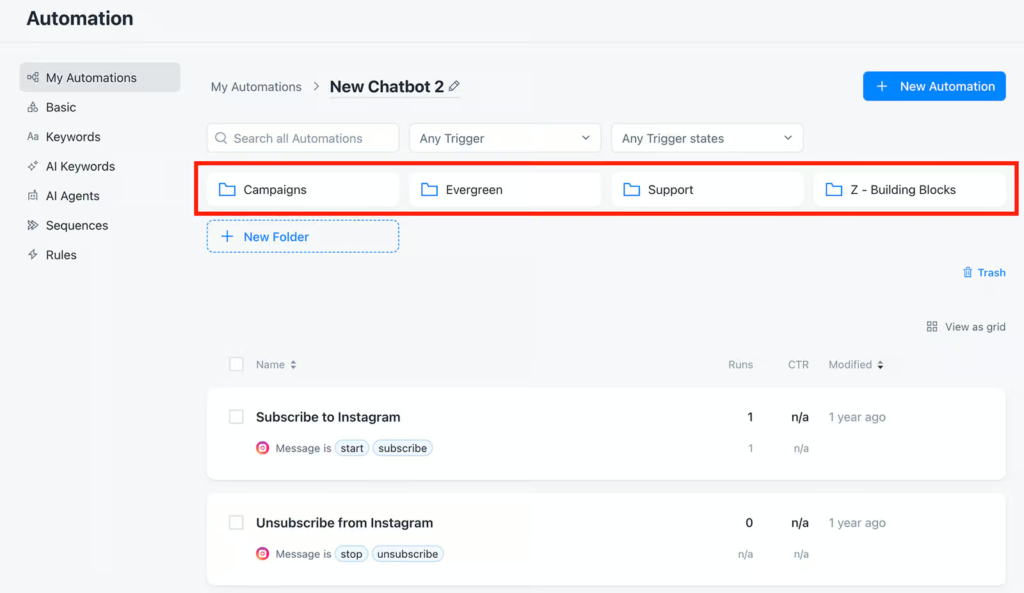
Where things become trickier is when your automations get large. Very large flows can start to feel tangled. If you’re building extensive campaigns with lots of branches, exceptions, and edge cases, the visual simplicity can start working against you. What looked clean in a small funnel can begin to resemble a plate of spaghetti in a big one.
That doesn’t make Manychat bad. It just means scale introduces complexity, and no visual builder escapes that forever.
Manychat Pricing: What Does It Cost?
Pricing is one of the biggest reasons people hesitate with Manychat, and fairly so. On the surface, it seems accessible. There is a free plan, and the entry-level paid pricing is not outrageous. But as your contact list grows, the cost grows with it.
That’s the part many users don’t think about in the beginning.
The free plan is enough to explore the platform, understand the dashboard, and build simple automations. It works nicely for testing, early-stage creators, or tiny businesses that want to experiment before committing. If you’re just dipping your toe in the water, this is helpful.
The Pro plan starts at a relatively affordable monthly rate, but pricing increases based on the number of contacts in your system. That means success can make the platform more expensive. If your automation starts working really well and your audience grows quickly, your monthly fee won’t stay small for long.
For some businesses, that’s perfectly fine. If Manychat is helping generate qualified leads or direct revenue, then the software is paying for itself. In that scenario, higher pricing is a good problem. But for businesses with big lists and weak monetization, the cost can start to sting.
There are also custom or enterprise-style options for larger brands that need extra support, advanced onboarding, or tailored service.
So is the pricing fair? In many cases, yes. Is it cheap forever? Definitely not.
That distinction matters.
A local service provider with a few hundred active leads may find Manychat very cost-effective. A high-growth creator or eCommerce brand with tens of thousands of contacts may need to watch the numbers more carefully.
The Pros of Manychat
One of the biggest advantages of Manychat is usability. It lowers the barrier to entry for automation. You don’t need to be deeply technical to start building meaningful workflows. That alone makes it appealing to entrepreneurs, agencies, and lean marketing teams.
Another major plus is its strength on social and messaging platforms, especially Instagram. If your business depends heavily on DMs, comments, and social engagement, Manychat is often far more relevant than traditional email-first marketing tools. It meets users where they already are.
Its visual builder is another strong point. Being able to see the customer journey laid out in front of you helps with planning and refinement. It’s easier to diagnose weak points when you can literally trace the route a user takes.
Segmentation and personalization also deserve praise. Sending the same robotic message to everyone rarely works. Manychat gives you ways to tailor conversations based on behavior and intent, which can make automations feel more thoughtful and less canned.
Then there’s time savings. And this one is not just marketing hype. If your inbox is flooded with repetitive questions, automating even a portion of those interactions can reclaim a serious amount of time each week. Time you could spend on sales, fulfillment, content creation, or, imagine this, actual rest.
It also has decent flexibility. Whether you want simple lead delivery or more layered conversational funnels, Manychat can usually handle a broad range of scenarios without requiring a custom development project.
The Cons of Manychat
Now for the less glamorous side.
The first drawback is pricing creep. Starting costs may feel modest, but scaling contact-based pricing can become expensive as your list grows. That’s not unusual in SaaS, but it’s still something to factor into your long-term planning.
Another issue is complexity at scale. For basic and mid-level workflows, Manychat feels approachable. For sprawling, deeply branched systems, it can become hard to manage cleanly. If your automation logic gets very elaborate, maintaining order takes discipline.
There’s also the platform dependence problem. If much of your business communication relies on Instagram, Facebook, or WhatsApp, you’re partly at the mercy of those ecosystems. Policy changes, messaging restrictions, or API shifts can affect what’s possible. That’s not really Manychat’s fault, but it is part of the reality.
Some users may also find that advanced customization requires external tools, integrations, or technical help. If you want a deeply customized CRM-like setup or highly bespoke workflows, you may eventually run into the platform’s limits.
And then there’s the human factor. Automation can absolutely improve efficiency, but overused automation can also make a brand feel cold or mechanical. If every interaction sounds scripted, customers notice. Manychat gives you the tools, but tone and strategy are still your responsibility.
In other words, the platform can help you sound faster. It won’t automatically help you sound better.
Who Should Use Manychat?
This platform makes the most sense for businesses that already get attention through messaging-heavy channels.
If you’re a creator, coach, consultant, educator, or local service business that gets frequent DMs and comments, Manychat can be a very practical fit. It’s especially useful when people regularly ask the same questions, request the same resources, or need a guided next step.
It’s also strong for eCommerce businesses that use social media as a sales engine. If your Instagram content drives discovery, inquiry, and purchase behavior, then turning those conversations into structured automations can be powerful.
Agencies also tend to like Manychat because they can build repeatable systems for clients. A restaurant, beauty clinic, real estate advisor, and fitness coach may all use different messaging, but the underlying automation logic can be surprisingly similar.
Who might not love it? Businesses that don’t rely much on messaging channels. If your lead flow comes mainly through search, long-form email nurturing, or direct sales outreach, then Manychat may not be your top priority. Likewise, if you need deeply custom enterprise workflows across complicated internal systems, a broader automation stack might make more sense.
A Real-World Example of Where Manychat Works Well
Let’s say you run a fitness coaching brand.
You post Instagram content every day. People comment things like “meal plan,” “workout,” or “help.” Before automation, your team spends hours manually replying, answering DMs, sending the same PDF repeatedly, and trying to remember who asked about coaching versus who just wanted a freebie.
Now imagine setting up Manychat to handle that first layer automatically.
A person comments “meal plan.” They receive an instant DM. The message asks whether they want fat loss, muscle gain, or a beginner guide. Based on their choice, they get the right resource. Then they’re asked whether they’d like coaching details. If yes, they move into a new sequence. If no, they still receive value and can be tagged for future content.
That is a much cleaner system than a chaotic inbox and a stressed-out team member trying to keep up.
Does it replace human sales entirely? No. But it warms up leads, filters intent, and keeps opportunities from slipping through the cracks.
Is Manychat Easy for Beginners?
Mostly, yes.
That said, “easy” is always relative.
If by easy you mean “I can set up something useful without coding,” then yes, Manychat is beginner-friendly. If by easy you mean “I can master advanced automation logic in ten minutes,” probably not.
There’s still strategy involved. You need to think about what users want, what questions to ask, when to branch, when to follow up, and when to let a human take over. A weak flow built in a simple tool is still a weak flow.
But compared to many alternatives, Manychat does a respectable job of making sophisticated automation more accessible. That’s a big reason it continues to attract people who are new to this space.
Final Verdict on Manychat
So, is Manychat worth it?
For the right business, yes — very much so.
If you rely on Instagram, Messenger, WhatsApp, or similar channels to generate leads, answer inquiries, and move people toward a sale, Manychat can be a genuinely valuable tool. It’s practical, relatively user-friendly, flexible enough for many real-world use cases, and strong at turning social engagement into structured conversations.
It isn’t flawless. Pricing rises with growth. Big automation maps can become messy. And if you use it lazily, your brand voice can start sounding like a vending machine with Wi-Fi.
Still, the upside is substantial.
Used well, Manychat can save time, improve follow-up, capture more leads, and create a smoother customer journey. Used poorly, it becomes just another dashboard collecting dust while your inbox remains a mess.
That’s probably the fairest way to put it: Manychat is not a miracle. But it is a very capable tool, and for businesses built around conversations, that can make all the difference.
Read Our another Review: ActiveCampaign Review (2026): Full Test of Automation, CRM & Pricing